
Description
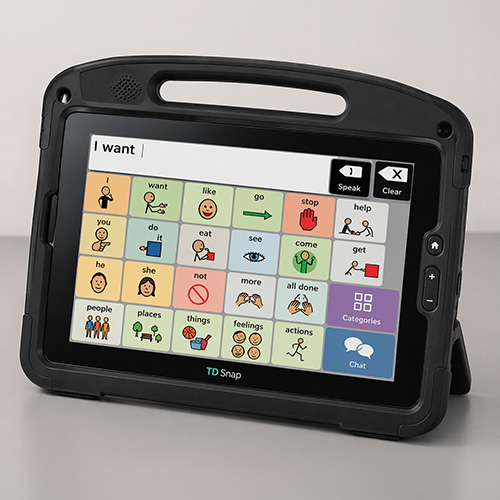
Augmentative and alternative communication (AAC) technologies support individuals who cannot rely on speech as their primary means of communication. As artificial intelligence becomes increasingly embedded in everyday tools, questions arise about how AI can and should be integrated into AAC systems — and whose values and priorities should shape that integration.
This project investigates how AAC users think about AI-powered features in communication technologies. Rather than beginning from a design or technical standpoint, we start by listening: through asynchronous focus groups, participants share their experiences, concerns, and hopes for AI in AAC contexts. Topics include trust, autonomy, personalization, privacy, and the risk that automation may flatten rather than support individual communicative identity.
The asynchronous format is itself a deliberate methodological choice, allowing participants who rely on AAC to engage on their own terms and timelines, without the pressures of real-time conversation. This design reflects a broader commitment to centering accessibility in how research is conducted, not only in what is studied.
Findings from this work will inform the development of tools like Pectogram and contribute to wider HCI and accessibility conversations about responsible AI integration in assistive technologies.
Team
Faculty
- Dr. Sarah Morrison-Smith
- Blade Frisch, M.S. (ABD)
- Dr. Rua Williams
Undergraduate Researchers
- Madeline Brogen
- Royce Carol
- Gwen Sawicki